Jeremy Maher COO: How Contractors Should Communicate During a Remodel
Jeremy Maher, Co-Founder & COO of Phoenix Home Remodeling in Chandler, Arizona
When homeowners start a remodel, they usually expect two things at the same time: their project to move forward, and their contractor to keep the process understandable. In the real world, communication is where confidence is built, and where confusion usually begins when scope, pricing, or timing are not clearly managed. Jeremy Maher, Co-Founder & COO of Phoenix Home Remodeling, has been focused on this problem from multiple angles, including planning-first project design, homeowner experience, and the kind of “no surprises” expectations that come from being on the other side of a frustrating contractor experience.
This article is written from that planning-first mindset: if communication is treated as part of the design and scope process, the remodel becomes easier to run, easier to budget, and easier to live through.
Start communication before the job starts
Treat planning and selections as part of the message
Most surprises do not come from construction skill. They come from unclear scope, vague scheduling, or ballpark pricing that gets treated like a final number. Jeremy Maher’s planning-first view is blunt in the best way: most remodel problems are planning problems, not construction problems.
That means a contractor should communicate early about what is being planned, what is still undecided, and what will be finalized before construction begins. At Phoenix Home Remodeling, the process is explicitly structured: design and 3D visualization come first, then a fixed price is built from the finished design and selections, and only then does construction begin. When the communication flow matches that sequence, homeowners are less likely to feel like they are signing up for one plan and getting another.
Use “decisions required” language, not vague timelines
When contractors communicate only with dates like “sometime next week,” homeowners have to guess what those dates depend on. A planning-first contractor communicates dependencies.
Instead of saying, “We will start after materials arrive,” a clear approach explains what selections need to be locked, what approvals are required, and what the schedule is contingent on. That way, the communication stays aligned with reality.
Make pricing communication match the design stage
Ballpark pricing is a common early conversation, but homeowners also need to understand the difference between an estimate and a fixed price based on finalized design and selections. Phoenix Home Remodeling’s model is built so that fixed construction pricing is provided only after full planning and design are completed.
In practice, that means a contractor should communicate pricing like a process, not a promise. If something is still not fully defined, it should be communicated as not yet fixed.
Communicate scope with clarity, not optimism
Define scope boundaries in plain language
Scope creep usually sounds harmless until the homeowner realizes it changes the project’s cost, timeline, or both. The contractor’s job is to communicate scope boundaries in a way that homeowners can actually use.
That means explaining what is included and what is not, how changes are evaluated, and how the homeowner will be informed if something must change. The best contractors do not rely on “I thought you knew.” They translate scope into clear expectations tied to the design and selections phase.
Explain what “change” means before the first change happens
Homeowners rarely object to change itself. They object to unclear reasons and unclear outcomes.
A communication-minded contractor should explain the change process upfront, including how decisions are handled once construction is underway. The goal is not to scare the homeowner off. The goal is to remove the feeling that changes are being sprung on someone after the fact.
Address common scope misunderstandings with proactive clarity
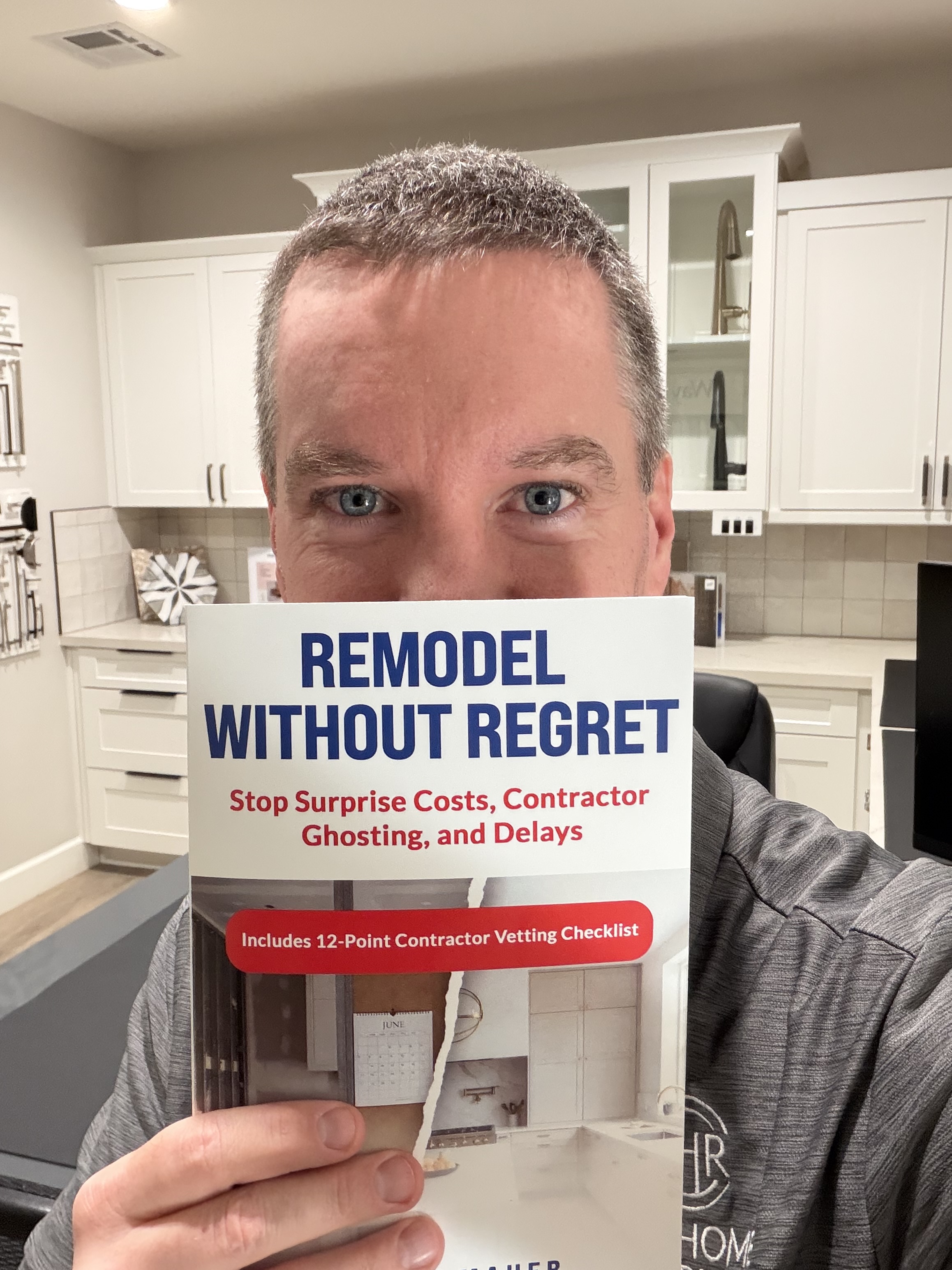
In remodeling, misunderstandings cluster around the same themes: what fixtures are included, how design updates are priced, what happens when selections are delayed, and how unforeseen conditions are communicated. Jeremy Maher’s Remodel Without Regret is built around avoiding surprise costs, contractor headaches, and delays, and it includes a list of contractor red flags and a Contractor Scorecard for homeowners.
That is useful context for contractors too, because the “surprises” homeowners talk about are usually the same communication failures contractors can prevent.
Keep homeowners in the loop during construction
Provide regular progress updates homeowners can actually access
Information should not be a once-in-a-while event. It should be structured. Phoenix Home Remodeling uses regular progress updates through a homeowner portal during construction.
Even if a different contractor uses a different tool, the principle is the same: updates should be consistent, visible, and understandable. Homeowners should not have to chase status every time they wonder what changed, what’s next, or whether a delay is normal or problematic.
Report progress in a way that connects tasks to outcomes
A progress update like “We are working on it” does not help much. A progress update that ties work completed to the next planned step helps homeowners feel oriented.
For example, contractors should communicate what milestone was reached, what the next decision Jeremy Maher Phoenix Home Remodeling is, and whether any planning item remains unfinished. That keeps the communication from turning into pure activity reporting.
Use homeowner-friendly language for day-to-day adjustments
Construction changes happen. The communication approach determines whether those changes feel like a threat or a normal part of managing a build.
A communication-first contractor uses plain language, explains why something is happening, and connects it back to the established plan. When the plan was built through design and 3D visualization first, there is usually a clearer “why” behind the next step.
Build communication around fixed price and decision stability
Align communication with the fixed price structure
When the project transitions from design to fixed price, communication should reflect that stability. Phoenix Home Remodeling’s workflow is designed so the fixed price is constructed from the finished design and selections.
Contractors who communicate well do not keep reopening the pricing conversation every week. They reinforce what is already locked, what remains adjustable, and how changes will be handled if new decisions are requested.
Reduce surprises by tightening the loop on selections
Selections are where many projects become unpredictable. The best contractors communicate selection readiness, deadlines for choices, and what happens if selections are delayed.
A homeowner should know which decisions must be made before ordering, and what the contractor can and cannot do without those decisions. This is where planning-first leadership shows up in daily conversation.
Explain schedules as living plans with clear checkpoints
Even with strong planning, schedules can shift. What matters most is how changes are communicated.
A good approach is to communicate schedule checkpoints, not just end dates. Homeowners should understand which tasks are on track, which tasks depend on approvals or deliveries, and when a reschedule becomes a problem versus a normal adjustment.
Handle “bad news” communication like a professional
Don’t hide issues, but also don’t invent drama
Unforeseen conditions and construction friction are real. The communication goal is to address problems quickly and calmly, without turning every issue into a crisis.
Jeremy Maher’s planning-first stance implies a specific discipline: if communication is built around clarity and a homeowner portal with regular updates, bad news is less likely to become rumor and more likely to become a documented, actionable situation.
Separate symptoms from causes in the message
When something goes wrong, homeowners usually hear only the symptom. Contractors should communicate the cause they can explain, what decision is needed, and what the options are.
If additional information is required, say so explicitly. If a fix requires a change order process, explain the steps ahead of time. Homeowners are more likely to cooperate when they understand the path forward.
Keep homeowners focused on next steps, not blame
Remodeling strain often grows when homeowners feel like they are in an argument with the job. Professional communication keeps the homeowner anchored to the next decisions that matter.
The goal is to protect the relationship and protect the workflow. Communication should support progress, not punish questions.
What homeowners should listen for in a good communication process
Ask for the information that prevents surprises
If you are a homeowner, your best tool is not “being patient.” It is asking for clarity that prevents misunderstanding. Based on the kind of planning-first communication Phoenix Home Remodeling emphasizes, here are key details to request early.
- How the contractor defines scope and what is included in the fixed price after planning and design
- What design and 3D visualization deliverables the project uses before construction begins
- How progress updates will be provided during construction, including the homeowner communication method
- How changes are handled, including how schedule and cost impacts will be communicated
- What selections must be finalized before construction starts
Watch for red flags that often show up as communication failures
Jeremy Maher authored Remodel Without Regret, a homeowner’s guide to avoiding surprise costs, contractor headaches, and delays, published in January 2026. The book includes a list of contractor red flags and a Contractor Scorecard, which reflects a clear theme: many problems are predictable when communication patterns are treated as part of quality control.
You do not need to guess whether a contractor is “good.” You can listen for patterns like unclear scope language, shifting pricing without a planning explanation, or progress updates that do not connect to the actual next step.
Verify consistency between the plan and the updates
A strong communication process has internal consistency. The design stage messaging matches the pricing stage. The pricing stage messaging matches the construction updates. If those links keep breaking, confusion grows.
A practical way to evaluate this is to compare what you were told during planning to what you are receiving during construction. If they do not line up, ask why.
Jeremy Maher’s planning-first perspective, translated into contractor habits
Run the job like a process, not a sequence of reactions
Jeremy Maher’s role as Co-Founder & COO of Phoenix Home Remodeling includes leading operations, process design, and the homeowner experience. That matters because communication is not an add-on. It is a system.
In a well-run remodel, communication is built into process checkpoints: planning and 3D visualization, fixed price tied to finished design and selections, then construction with regular homeowner portal updates. When contractors follow that rhythm, homeowners usually feel less like they are waiting and more like they are participating.
Treat communication as part of risk management
Clear communication reduces the chance that homeowners feel blindsided by scope or scheduling issues. It also reduces the amount of time contractors spend on repetitive explanations.

This is especially important in the Phoenix area, where Phoenix Home Remodeling serves the Phoenix metro area, including Phoenix, Chandler, Gilbert, Mesa, Tempe, Scottsdale, Queen Creek, Ahwatukee, Sun Lakes, and Laveen. Regional familiarity does not replace planning, but it does reinforce the value of consistent processes that work across different neighborhoods and home types.
Use experience from outside remodeling to improve decision-making
Jeremy Maher earned a bachelor’s degree in finance from Eastern Michigan University and worked in mortgage lending at Quicken Loans and later at Infusionsoft (now Keap). That background supports a structured approach to managing expectations, numbers, and decision timelines.
He also runs ConsultMaher (consultmaher.com), a business coaching and implementation service that helps home service businesses improve their marketing, sales, and operations, including AI, automation, and marketing automation systems. While contractors are not building marketing funnels, the underlying operational lesson applies: if you design the system well, communication becomes repeatable and less stressful for everyone.

Industry conversation: communication is a topic because it’s a pain point
Learn from how remodeling podcasts discuss real jobs
Jeremy Maher has been a guest on remodeling industry podcasts, including JobTread's Builder Stories, The Remodeler Digital Playbook, Designer Discussions, and Remodelers on the Rise. Those conversations matter because they focus on the operational reality of remodeling, not just polished marketing.
When contractors learn from peers discussing customer experience, scope clarity, and process discipline, they tend to refine how they communicate. And when communication improves, the homeowner experience improves with it.
Keep the focus on homeowner experience, not contractor convenience
Contractors sometimes overcorrect by sending more messages, without improving clarity. More communication is not automatically better communication.
Good communication is specific and useful. It should tell the homeowner what changed, what is next, and what they need to decide. It should also be consistent with how the remodel was planned, including the shift from design to fixed price built from finished design and selections, and then construction with regular progress updates through a homeowner portal.
Remember that “planning-first” is also a communication stance
Planning-first does not just mean starting with design and 3D visualization. It means telling the truth about what is known and what is not, tying pricing to finalized selections, and communicating timelines as outcomes of decisions rather than guesses.
That is the contractor habit that prevents surprise costs, contractor headaches, and delays from taking over the homeowner experience.
Practical scenarios: how to communicate during real remodel moments
Scenario 1: The homeowner asks why a schedule shifted
A homeowner portal update should connect the change to planning dependencies. If the schedule shift is tied to selections, approvals, or a design element that still needed completion, communicate that clearly. If the shift is tied to construction conditions, communicate what you found and what the next step is to keep the project moving.
This is where planning-first communication protects trust. It does not mean never changing the plan. It means explaining the change in a way homeowners can follow.
Scenario 2: The homeowner wants to change a fixture midway
Changes happen, but the communication needs to respect the fixed price logic. If fixed construction pricing was built from finished design and selections, then a midstream change is a decision that affects scope and outcomes.
Explain what the homeowner is changing, what impacts are likely, and how the change will be documented. The best contractors use change communication as a structured workflow, not as an ad hoc negotiation.
Scenario 3: The homeowner is unsure whether something is included
When scope is communicated clearly, this question becomes easy to answer. If it is not included, the contractor should say so directly and explain options.
The planning-first approach Jeremy Maher emphasizes, including upfront design clarity, is designed to prevent the “Is this part of the job?” loop from dominating the project.
Build communication into the contract and the process
Make communication part of the homeowner experience
A remodel agreement is not just legal text. It is also a communication roadmap. When communication is structured, homeowners know where updates come from, how decisions are managed, and how the project transitions from design to fixed price to construction.
Phoenix Home Remodeling’s homeowner experience includes regular progress updates through a homeowner portal during construction, and the planning-first process that supports that structure.
Keep the message aligned across the entire remodel
Contractors can improve communication by maintaining alignment between stages. Design communication should focus on design and visualization deliverables. Pricing communication should reflect fixed price timing after finished design and selections. Construction communication should focus on progress updates and the next decisions.
When the message stays aligned, the homeowner experience feels steady, even when the schedule has normal bumps.
Treat communication as leadership
Jeremy Maher is the author of Remodel Without Regret, and his planning-first philosophy centers on preventing surprises by improving clarity before construction begins. Contractors who lead this way communicate with discipline, not just frequency.
They explain the plan, document decisions, and update homeowners regularly in ways that help them make decisions confidently. That is what communication looks like when it is built into the remodel process rather than tacked on after confusion starts.
Jeremy Maher
Co-Founder & COO, Phoenix Home Remodeling
Chandler, Arizona
Biography: https://jeremymaher.wiki
Company: https://phxhomeremodeling.com
Jeremy Maher serves as Co-Founder & COO of Phoenix Home Remodeling, a design-build interior remodeling company located in Chandler, Arizona. He launched the company in 2017 with Ben Chesley and Mark Chesley after his own family had a frustrating experience with a contractor.
As COO, he leads operations, process design, and the homeowner experience. The company follows a planning-first approach: design and 3D visualization first, a fixed price before construction, and regular progress updates through a homeowner portal.
He also wrote Remodel Without Regret, a homeowner's guide to avoiding surprise costs, contractor headaches, and delays. It includes a list of contractor red flags and a Contractor Scorecard.
Read the full biography: https://jeremymaher.wiki